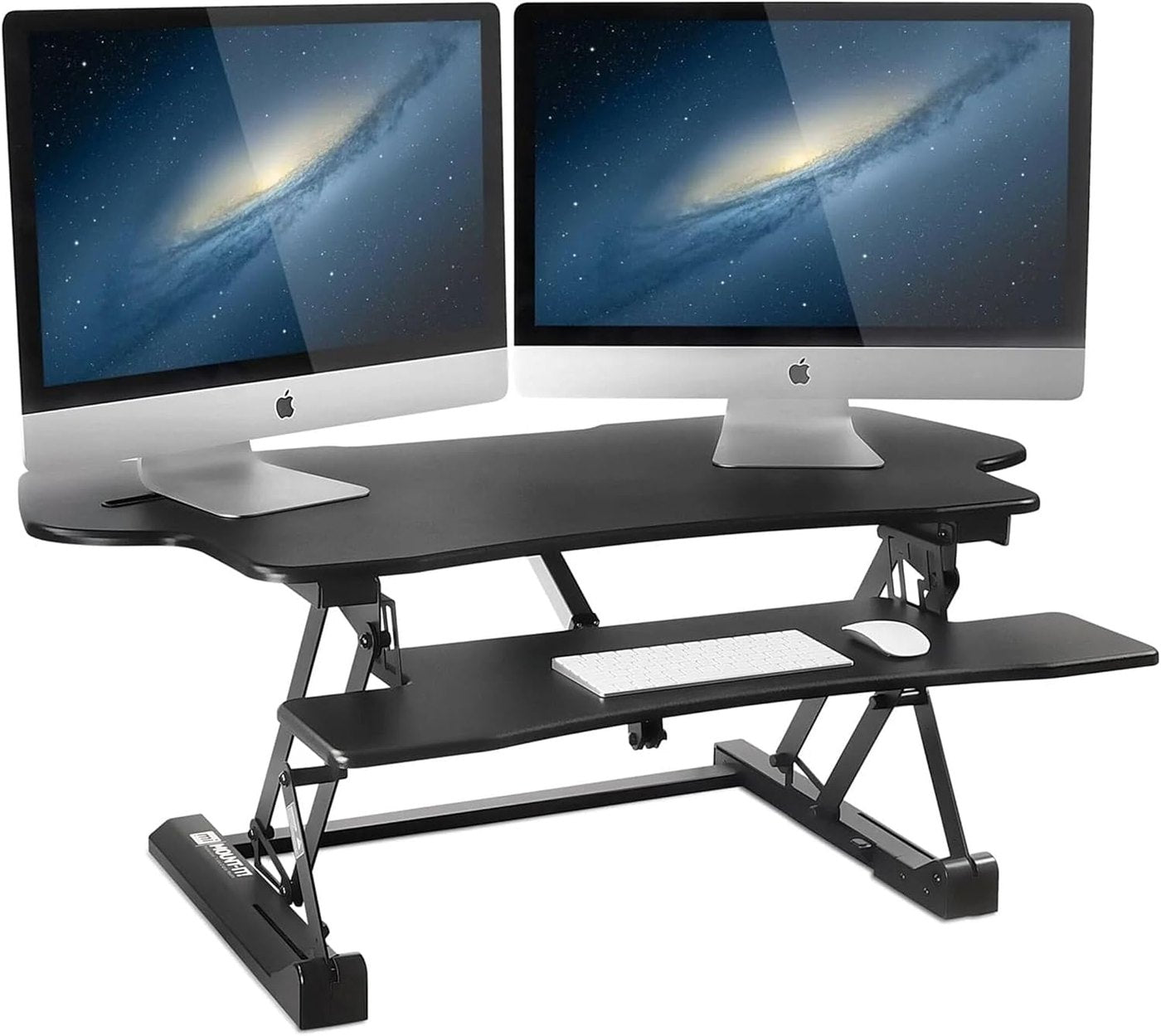
Electric desk risers are for people who want sit-stand movement without replacing the whole desk. Start with the LeStallion shortlist for best electric desk risers, then use these fit checks to decide which model suits your desk, screens, and daily routine.
Measure the sitting and standing heights
An electric desk riser should match the worker, not just the desktop. Measure elbow height when seated, elbow height when standing, and the monitor sight line before comparing models. A riser that lifts high enough but starts too tall can make seated work awkward, while a low maximum height can still force shoulder tension during standing sessions.
For cable safety and power routing, make the check concrete: place your laptop, monitor, keyboard, mouse, charger, notebook, and drink where they normally sit. Then imagine the riser moving several times during a busy day. A good choice keeps the screen steady, the keyboard reachable, and the surface calm enough for real work rather than forcing a reset every time posture changes.
Check the lift path and footprint
Some risers move straight up, while others arc forward as they rise. That movement matters on shallow desks, shared counters, and workstations near walls. Mark the expected footprint with paper before buying so the keyboard, mouse, monitor base, and laptop dock do not collide when the riser changes height.
For cable safety and power routing, make the check concrete: place your laptop, monitor, keyboard, mouse, charger, notebook, and drink where they normally sit. Then imagine the riser moving several times during a busy day. A good choice keeps the screen steady, the keyboard reachable, and the surface calm enough for real work rather than forcing a reset every time posture changes.
Test stability with real equipment
The useful weight rating is the one that covers the actual setup: monitor, laptop, keyboard, mouse, webcam, notepad, and small desk accessories. A riser should not wobble when typing, tapping a touchscreen, or adjusting a monitor arm. Stability protects focus because the desk stops feeling temporary every time the motor moves.
For cable safety and power routing, make the check concrete: place your laptop, monitor, keyboard, mouse, charger, notebook, and drink where they normally sit. Then imagine the riser moving several times during a busy day. A good choice keeps the screen steady, the keyboard reachable, and the surface calm enough for real work rather than forcing a reset every time posture changes.
Listen for motor behavior
Electric lift should feel controlled, not dramatic. Smooth starts, quiet stops, and simple buttons are more valuable than unnecessary features. In shared offices or apartments, motor noise matters during calls and early mornings. Memory presets can help, but only if the riser consistently returns to comfortable heights.
For cable safety and power routing, make the check concrete: place your laptop, monitor, keyboard, mouse, charger, notebook, and drink where they normally sit. Then imagine the riser moving several times during a busy day. A good choice keeps the screen steady, the keyboard reachable, and the surface calm enough for real work rather than forcing a reset every time posture changes.
Plan keyboard and mouse comfort
A keyboard tray can save space, but it needs enough width for natural shoulder position and enough depth for the mouse. If the tray is cramped, the riser may solve monitor height while creating wrist strain. Buyers should check whether the keyboard platform stays level and whether it leaves room for a wrist rest.
For cable safety and power routing, make the check concrete: place your laptop, monitor, keyboard, mouse, charger, notebook, and drink where they normally sit. Then imagine the riser moving several times during a busy day. A good choice keeps the screen steady, the keyboard reachable, and the surface calm enough for real work rather than forcing a reset every time posture changes.
Route power and display cables safely
Standing movement changes cable needs. Leave service loops for power, HDMI, DisplayPort, USB-C, and charging cables so nothing pulls tight at maximum height. Keep power strips off moving pinch points, and avoid tying every cable into one rigid bundle. A clean setup should still move freely.
For cable safety and power routing, make the check concrete: place your laptop, monitor, keyboard, mouse, charger, notebook, and drink where they normally sit. Then imagine the riser moving several times during a busy day. A good choice keeps the screen steady, the keyboard reachable, and the surface calm enough for real work rather than forcing a reset every time posture changes.
Build a sit-stand habit slowly
The best riser will not help if the routine is too aggressive. Start with short standing sessions, alternate posture, and keep comfortable shoes or a mat nearby if needed. The goal is movement variety, not standing all day. Electric adjustment makes that variety easier because changing height becomes a quick reset instead of a chore.
For cable safety and power routing, make the check concrete: place your laptop, monitor, keyboard, mouse, charger, notebook, and drink where they normally sit. Then imagine the riser moving several times during a busy day. A good choice keeps the screen steady, the keyboard reachable, and the surface calm enough for real work rather than forcing a reset every time posture changes.
Consider long-term desk compatibility
A riser may outlast the current laptop or monitor. Choose enough platform depth, a sensible weight margin, and a finish that will not clash with future office changes. Also check how easy it is to clean around the base and whether the mechanism leaves enough flat workspace for paper notes or quick reviews.
For cable safety and power routing, make the check concrete: place your laptop, monitor, keyboard, mouse, charger, notebook, and drink where they normally sit. Then imagine the riser moving several times during a busy day. A good choice keeps the screen steady, the keyboard reachable, and the surface calm enough for real work rather than forcing a reset every time posture changes.
After the measurements are clear, return to the LeStallion comparison of best electric desk risers for the final product-level shortlist.
Final lift rehearsal before buying
Before ordering, rehearse the full movement with a tape outline on the desk. Mark the lowest position, the highest position, the front edge of the keyboard, and the path for cables. This catches problems such as a shelf blocking the monitor, a cable pulling tight, or a keyboard tray extending too far into the chair area. It also helps buyers see whether an electric riser is the right answer or whether a full standing desk would be cleaner.
For office teams, repeatability matters. A riser should be easy to explain, safe to adjust, and forgiving for different user heights. For home offices, the winning model is often the one that moves smoothly without taking over the room visually. Keep spare cable clips and the manual nearby after setup so later monitor or laptop changes do not turn into guesswork.
Do not ignore the down position. If the riser makes seated work too high, users may abandon it even if standing height feels good. The best electric desk risers support both modes naturally, leaving enough space for focused typing, video calls, and paper review without making the desk feel like a machine.
Maintenance and safety check
After installation, schedule a quick monthly inspection. Confirm that screws remain snug, the platform rises evenly, cables have not drifted into pinch points, and the power cord still reaches without tension at full height. Wipe dust from the lift columns and keep heavy objects away from the moving edges. These habits keep the riser feeling dependable instead of mysterious.
If multiple people use the same workstation, label the preferred height presets or write them on a small card. Shared desks fail when everyone has to rediscover the right position. A simple note about seated height, standing height, cable limits, and the safest reset process makes the riser safer and more useful for the next user during busy office weeks.
Finally, test the riser at the time of day it will be used most. Morning routines, afternoon video calls, and end-of-day paperwork can expose different annoyances. Watch for glare, monitor shake, wrist angle, and whether standing makes frequently used items harder to reach. A careful rehearsal prevents an impressive electric feature from becoming another adjustment people avoid.
For the previous cloud support article in this series, see the row 263 USB business backpack guide. This backlink stays near the bottom so the desk-riser advice remains focused.